

 Current location:
NEWS INFORMATION
NEWS INFORMATION
What are the production standards of reputable tuk tuk manufacturers?
author:admin date:2026-03-30 17:51:44 click:131
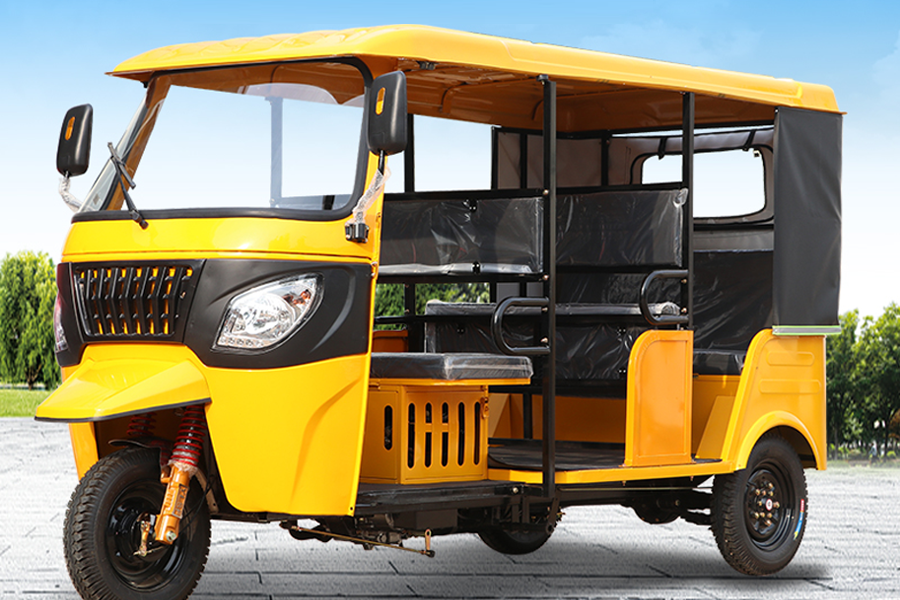
Reputable tuk tuk manufacturers adhere to strict production standards to ensure the quality, safety and reliability of their products, which is also the key to their long-term development in the market. These production standards cover all links from raw material selection, component production to finished product inspection, and are formulated in accordance with relevant national and industrial regulations, without involving any enterprise-related information.
First, strict quality control of raw materials and core components. Reputable manufacturers will select high-quality raw materials that meet national standards, such as high-strength steel for the frame, wear-resistant materials for the tires, and qualified electrical components for the power system. For core components such as engines, motors, batteries and controllers, they will cooperate with qualified suppliers and conduct strict incoming inspections to ensure that the components meet the design requirements and performance standards. Unqualified raw materials and components are prohibited from entering the production link to avoid affecting the overall quality of the vehicle.
Second, compliance with national safety and emission standards. Safety and environmental protection are important indicators of tuk tuk production. Reputable manufacturers strictly follow national and local safety standards, including the strength of the frame, the performance of the braking system, the reliability of the steering system and the safety of the electrical system. The vehicle's braking distance, load-bearing capacity and other indicators must meet the specified standards to ensure the safety of drivers and passengers during use. For fuel-powered tuk tuks, they must comply with national emission standards to reduce exhaust emissions and environmental pollution; for electric tuk tuks, they must meet the safety standards for batteries and electrical systems to avoid safety hazards such as short circuits and fires.
Third, standardized production processes. Reputable manufacturers have mature and standardized production processes, including frame welding, body assembly, component installation, painting and other links. Each production link has clear operating specifications and quality requirements, and professional technicians are arranged to operate and supervise to ensure the consistency and stability of product quality. For example, in the frame welding link, professional welding equipment and techniques are used to ensure that the welding is firm and smooth, without cracks or deformation; in the painting link, environmentally friendly paint is used, and the painting process is standardized to ensure that the paint surface is smooth, uniform and corrosion-resistant.
Fourth, strict finished product inspection procedures. Before the tuk tuks leave the factory, reputable manufacturers will conduct comprehensive inspections on each vehicle, including appearance inspection, performance testing and safety testing. Appearance inspection mainly checks whether the body is intact, the paint surface is free of scratches, and the components are installed properly; performance testing mainly tests the power performance, braking performance, steering performance and endurance performance of the vehicle; safety testing mainly checks whether the safety components (such as seat belts, lights, brakes) are intact and effective. Only vehicles that pass all inspections can leave the factory, and unqualified vehicles must be rectified and re-inspected until they pass.
In addition, reputable manufacturers also pay attention to the improvement of production technology and product upgrading, and continuously optimize the design and production process according to market demand and technical development to improve the performance and comfort of tuk tuks. At the same time, they will establish a complete quality management system to supervise the entire production process and ensure that the production standards are strictly implemented, providing customers with high-quality and reliable tuk tuk products.
Renqiu Xianyue Motorcycle Co., Ltd.
Contact Person: Manager Xuan
Service Hotline:
+86 13230776125
Email:
2229264029@qq.com
ADD:50 Meters West of Yongsheng Street, Nanzhang Village, Changfeng Town, Renqiu City, Cangzhou City, Hebei Province, China
Copyright © 2026-2027 http://xuanyue.chiyekeji.top. All Rights Reserved Renqiu Xianyue Motorcycle Co., Ltd.